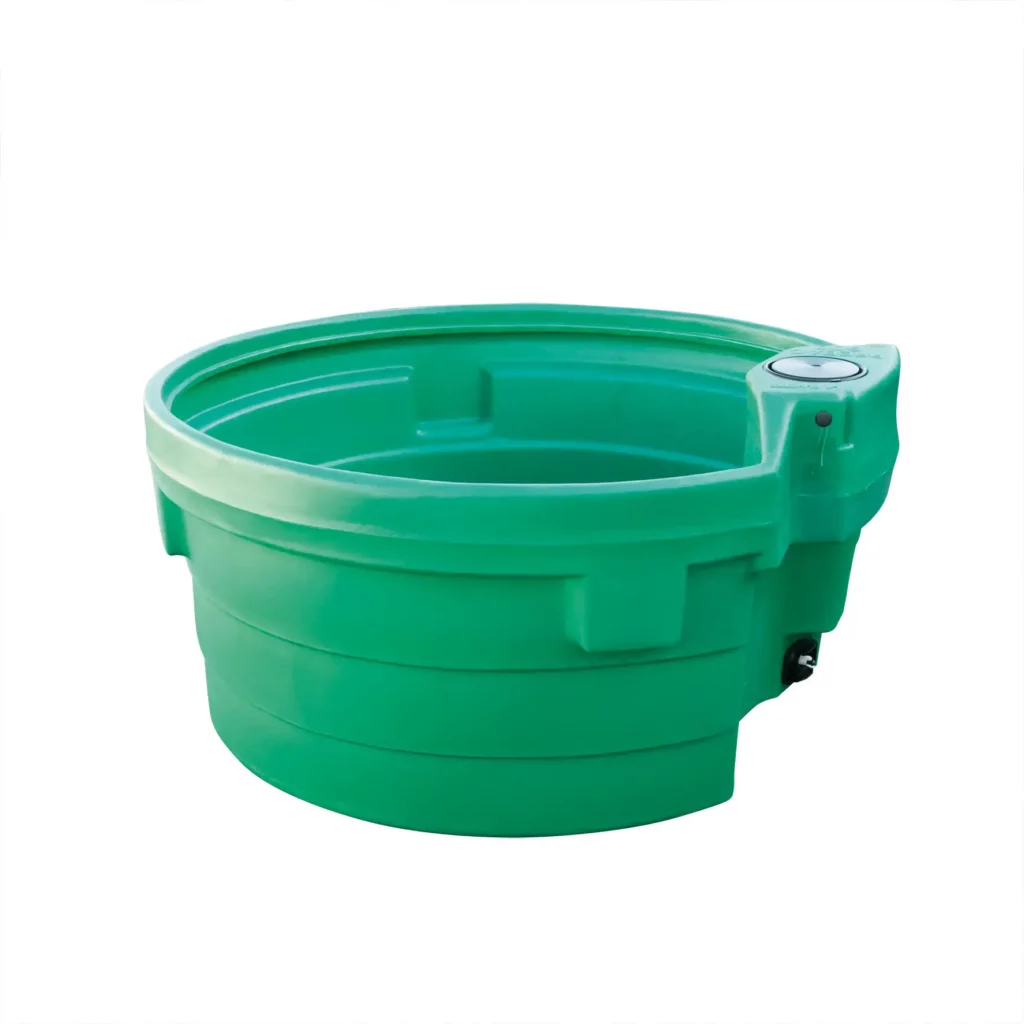
Rotational moulding

Plastic Rotational Moulding Products and Services

Trifibre is your rotational moulding specialist and OEM partner for plastic products. We specialise in providing customised and affordable rotational moulding services and producing plastic products for a wide range of industries in the UK and internationally.

At our high-tech manufacturing facility in the East Midlands, we have built a reputation for the quality of our products and our personalised approach to design and manufacture.

Rotational moulding, also known as rotomoulding, can be used to manufacture a diverse range of simple and complex products. It involves the use of sophisticated plastic moulding technology and is most often used to make hollow products and components, such as rigid plastic boxes for storing electronic equipment, boxes and containers and children's toys.

Rotational moulding is a popular method of manufacturing plastic products due to its accessibility and is used by a wide range of industries as it provides a precise and robust finish on every item.

As a leading rotational moulding company in the UK, Trifibre has invested in the best technology and uses the highest quality materials to develop resistant and durable products through our customised rotational moulding service.

Read on to find out more about our rotational moulding products and services and how they can benefit your business.

Project Consultation

Let us help you on your project journey from start to finish.

Read more


Product Design

Our experienced team of designers gets the best out of your idea.

Read more


Tool Design and Manufacture

Better tools result in better and more efficient products.

Read more


Product prototypes

Prepare your product for its big launch!

Read more


Manufacturing

Get reliable service and consistent product quality from Trifibre.

Read more


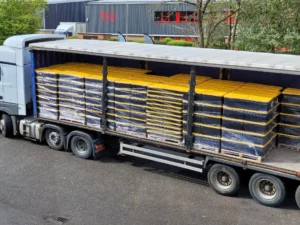
Storage and Drop Shipping

Let's grow together! Trifibre can take the heavy lifting out of the logistics of your rotomoulded product.

Read more


Our rotational moulding capabilities

Our specialist knowledge and capabilities make us the UK's first choice for rotational moulding services, but we also believe in using the best tools for the job. To that end, we invest heavily in our rotational moulding equipment so that we can deliver the highest quality products every time.

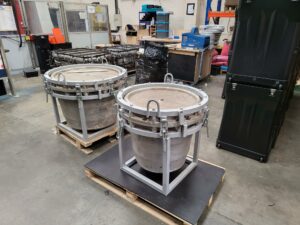
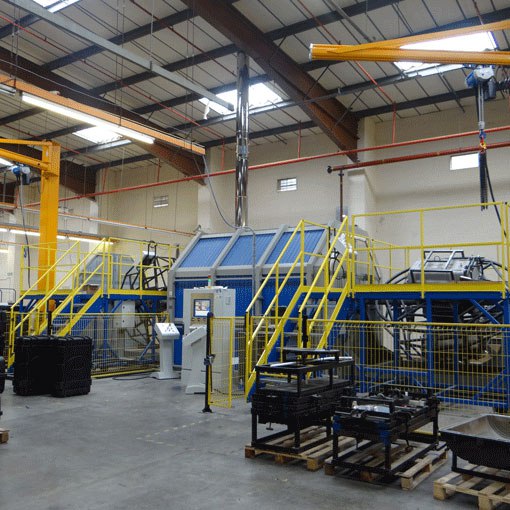
This latest machine is a traditional four-arm carousel rotomoulding machine with a 4.5 metre oven that allows us to increase our capacity to produce much larger products or use more tools simultaneously per cycle, compared to traditional shuttle rotomoulding machines.

It is our continuous investment in our services that makes Trifibre the leading rotational moulding company in the UK.

How rotational moulding works

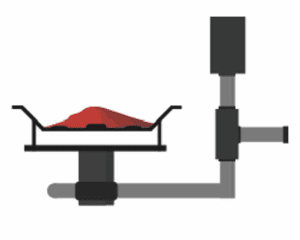
Loading

The raw material is placed in the mould. The most common material is polyethylene (LDPE, HDPE, LLDPE, PEMD), which is available in a wide variety of colours. Additives can be added during the rotomoulding process for different requirements, such as UV protection and colour consistency.

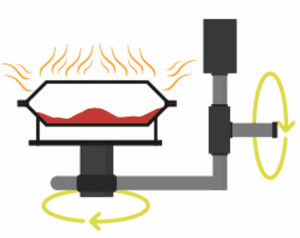
Heating

The mould is then heated in an oven and rotated, causing the polymer to cover the walls of the mould. Rotation takes place on two or more axes that rotate at different speeds and frequencies. This allows for a uniform wall thickness and a clean finish for each rotomoulded product.

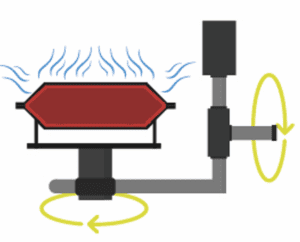
Cooling

After heating, the mould is cooled while it rotates to ensure a uniform wall thickness. During this period, the product will undergo a small shrinkage, which is taken into account when designing the mould. The shrinkage aids the removal of the product from the tool.

Removal

The final stages of the rotomoulding process are removing the product from the tool and finishing. During the finishing process, the parts are trimmed and allowed to cool further, sometimes using moulds to prevent further shrinkage and to obtain a precise end product.

Your OEM partner for plastic products

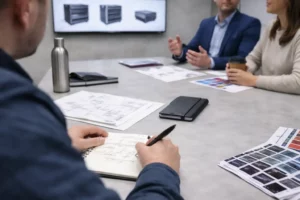
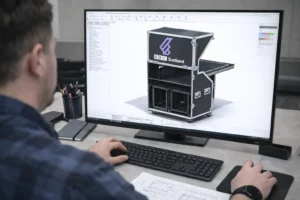
At Trifibre, we believe in a customer-focused approach and provide a complete OEM rotational moulding service. Using Computer Aided Design (CAD) software, we work with you to produce designs and prototypes to ensure your requirements are fully met before production.

Once these designs are finalised, we ensure that the manufacture of your project is completed efficiently and successfully. To manufacture your plastic products, we use polyethylene, polypropylene, polyvinyl chloride (PVC), nylon or polycarbonate in our rotational moulding process.

Since the tools used in rotational moulding make it an economical manufacturing technique, we offer competitive prices for quality products. See our frequently asked questions about plastic rotational moulding for more information on the process.

Founded in 1981, the Trifibre Ltd group has over 40 years' experience in manufacturing and has earned an excellent reputation for providing personalised, innovative and design-based products.

Contact us If you want Trifibre to become your OEM rotomoulding company or for support with your new custom rotomoulding project!
What are the benefits of rotational moulding?

There are innumerable advantages to using rotational plastic moulding for your products. It is an affordable manufacturing process that provides a uniform finish and a strong, durable final product, as well as offering complete design freedom and the ability to create highly complex shapes.

Durable and reliable

Products made with rotational moulding are inherently reliable, internal stresses are minimal and joints are eliminated. The materials are resistant and resilient even under extreme conditions when compared to manufacturing, fibreglass, injection, vacuum or blow moulding.

Unlimited Design Possibilities

Rotomoulding offers the opportunity to manufacture stress-free parts with a uniform wall thickness and complex shapes. The process is extremely versatile. Parts can be manufactured with moulded inserts, while textures and surface effects can be reproduced with relative ease.

Low Cost

The tools used to produce rotational moulding products are created from steel or aluminium and are relatively inexpensive compared to the tools used in other processes, such as blow moulding or injection moulding. What's more, all our plastic rotational moulding products are manufactured and made in the UK.

Cachorro no degrau de subida do cavalo

Leading rotational moulding company

Trifibre Ltd has over 40 years of manufacturing experience and provides customer-focused consultancy for OEM rotomoulding services through our professional and experienced customer service team to ensure that individual customer requirements and project briefs are met. Trifibre is currently the preferred rotomoulding OEM partner for companies in a wide variety of sectors, including leisure, medical, utilities and construction.

For more information about our plastic rotomoulding services or to find answers to frequently asked questions, read our Rotomoulding Guide.

An ISO 9001 Registered Company

We are rotational moulding specialists with over 40 years' experience. Our in-house design and technical team takes your project from concept to completion, and everything is managed at our 6,500 m² facility in the UK.

If you would like to find out more, simply fill in a contact form or call 0116 232 3166 or send an e-mail to [email protected]

Start...

If you would like to work with us, or even if you would like to know more, send us a message and one of our team members will get back to you as soon as possible.

We'll only ever use details submitted here in relation to your enquiry, and your information is secure in line with our privacy policy.

Trifibre guide to frequently asked questions about rotomoulding

What is rotational moulding?

Rotational moulding involves the use of computer-controlled machines to guarantee consistent quality for each unit produced. The plastic rotational moulding process is divided into four operations:

1. Loading

The rotational moulding process begins by loading a hollow aluminium mould with a predetermined amount of polymer powder, usually polyethylene and virgin or recyclable material. The mould is then closed, locked and loaded into an oven chamber.

2. Heating

Once inside the oven, the mould is rotated biaxially (i.e. about 2 axes). The oven temperature, usually between 260°C and 370°C depending on the material used, causes the polymer to melt. As the mould rotates, the molten polymer is dispersed evenly and coats the inside walls of the mould.

3. Cooling 

After the mould has been rotated enough to spread the molten polymer evenly, it is removed from the oven and cooled, causing the polymer to solidify.

4. Downloading

When the mould has cooled down enough to retain its shape, it is opened and the product removed. The mould can then be refilled and the rotomoulding process repeated.

What is rotational moulding used for?

A wide range of everyday items are made using rotomoulding due to its versatility as a manufacturing process. Waste bins and rubbish containers, car panels and cup holders, aircraft components, road cones and barriers, and children's toys are just some of the products that are made using rotomoulding.

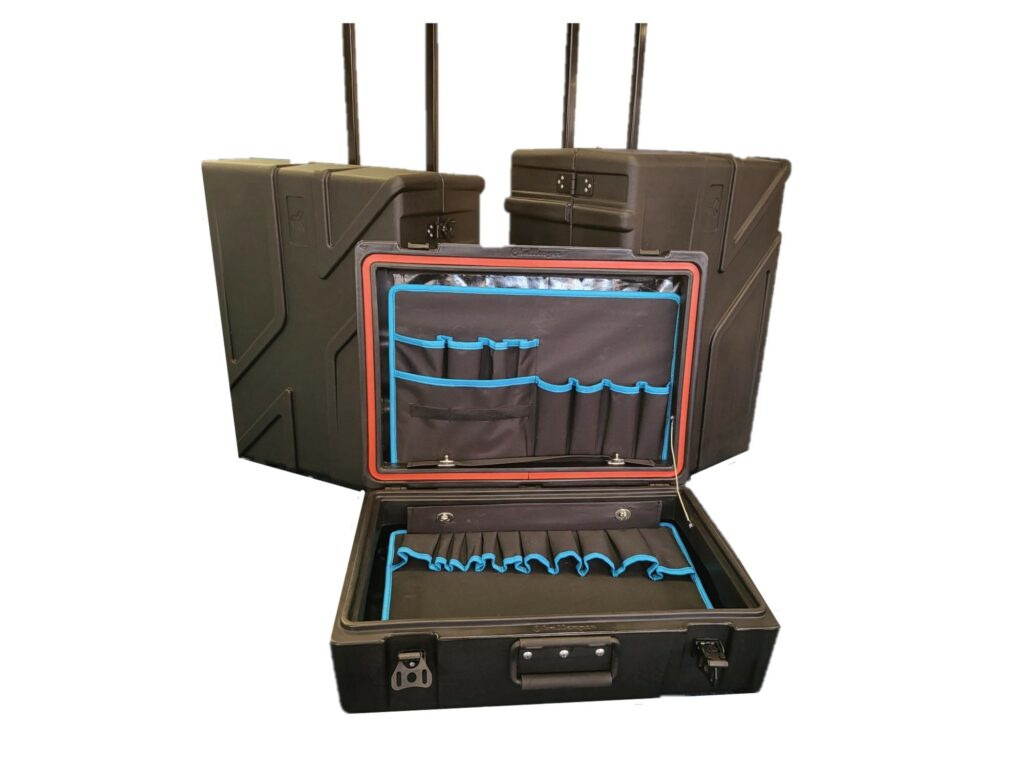
At Trifibre, rotational moulding is used to manufacture our display cases and point-of-sale stands, including products for Salem & Senior Design. The resulting products are lightweight, which ensures they can be easily transported, and incredibly strong to protect the contents, which can include roll-up banners or product samples. We also added hinges, zips and wheels for greater usability.

Have a look around to the various components used to make the Trifibre Pegasus case a useful piece of kit for exhibitions and events. Contact us for a rotational moulding quote.

What are the advantages of using rotational moulding?

Rotational moulding can be used to make a wide range of plastic products that require a rigid and highly resilient finish. It is recognised as a highly versatile and reliable manufacturing process because it reduces internal stresses by providing a consistent finish through an even distribution of materials and eliminates the need for gaskets.

Strength and resilience

Products made by rotational moulding have no seams or joints, so they can withstand more extreme conditions than those made by injection moulding, vacuum or blown fibreglass.

Precision

Computer-aided design (CAD) software is used to create completely accurate drawings. It helps optimise the design and manufacturing process and improves the overall quality of the final product.

Accessibility

Rotomoulding is ideal for projects that require an affordable manufacturing process, as the moulds are created using inexpensive materials such as aluminium.

Lightweight products

It's a popular manufacturing process for products that need to be light and easy to use, but also strong enough to withstand external pressure or weight. It is an ideal solution for making hollow products such as water containers, kayaks, floats and buoys.

Details

Individual moulds are tailor-made for each project and can incorporate a variety of details, including textured finishes, brand logos, symbols or other lettering.

What materials are used in rotational moulding?

At the start of the process, metal moulds are created using aluminium, while the final product is made from polyethylene, polypropylene, polyvinyl chloride (PVC), nylon or polycarbonate.

At Trifibre, we use a powdered polymer, usually polyethylene and virgin or recyclable materials, to make products using rotational moulding. Polyethylene is an ideal material for the rotational moulding process as it does not deteriorate when exposed to extreme heat, allowing it to be easily melted and manipulated into a variety of shapes and articles.

How does rotational moulding work?

Rotomoulding is a thermoplastic moulding process that involves four main processes: loading, heating, cooling and unloading. As a largely automated process, rotomoulding can improve production times while producing high-quality articles.

Computer Aided Design (CAD) software is used during the development process to create precise product designs and complex shapes. It can also predict how a product might react to external factors, such as extreme temperatures.

At Trifibre, CAD software also allows us to calculate weight and volume for precise material utilisation and accurate budgets.

See one of our rotational moulding machines in action.